Improving gut health in dogs and cats is the cornerstone of integrative veterinary medicine, because the gastrointestinal tract is not just responsible for digestion, it also plays a role in immune regulation and overall metabolic health. Many chronic conditions, such as allergies, inflammatory bowel disease, are linked to disruption of the gut microbiome and intestinal barrier. In this article, we share how we can restore balance to the gut using a combination of nutritional support, microbiome therapies and gut-healing supplements.
1. Soothing and protecting the gut lining
When the digestive tract is inflamed, supporting the intestinal lining can help reduce irritation and improve stool quality. A commonly used herbal remedy is slippery elm, which contains a gel-like fibre that coats and protects the digestive tract. Other herbs with similar soothing effects include marshmallow root and chamomile, which can benefit pets with gastritis, inflammatory bowel conditions.
2. Binding toxins and stabilising stools
During digestive flareups, natural binders such as therapeutic clays (e.g. bentonite or montmorillonite clay) may help adsorb toxins and bacterial by-products in the gut. They can also bind excess water in the intestines and improve stool quality.
3. Feeding the good bacteria
Beneficial bacteria need the right nutrients to thrive. Prebiotics are fermentable fibres that nourish these microbes and encourage the production of short-chain fatty acids. Examples include inulin, resistant starch, pumpkin, chicory root fibre and psyllium.
4. Reintroducing beneficial microbes
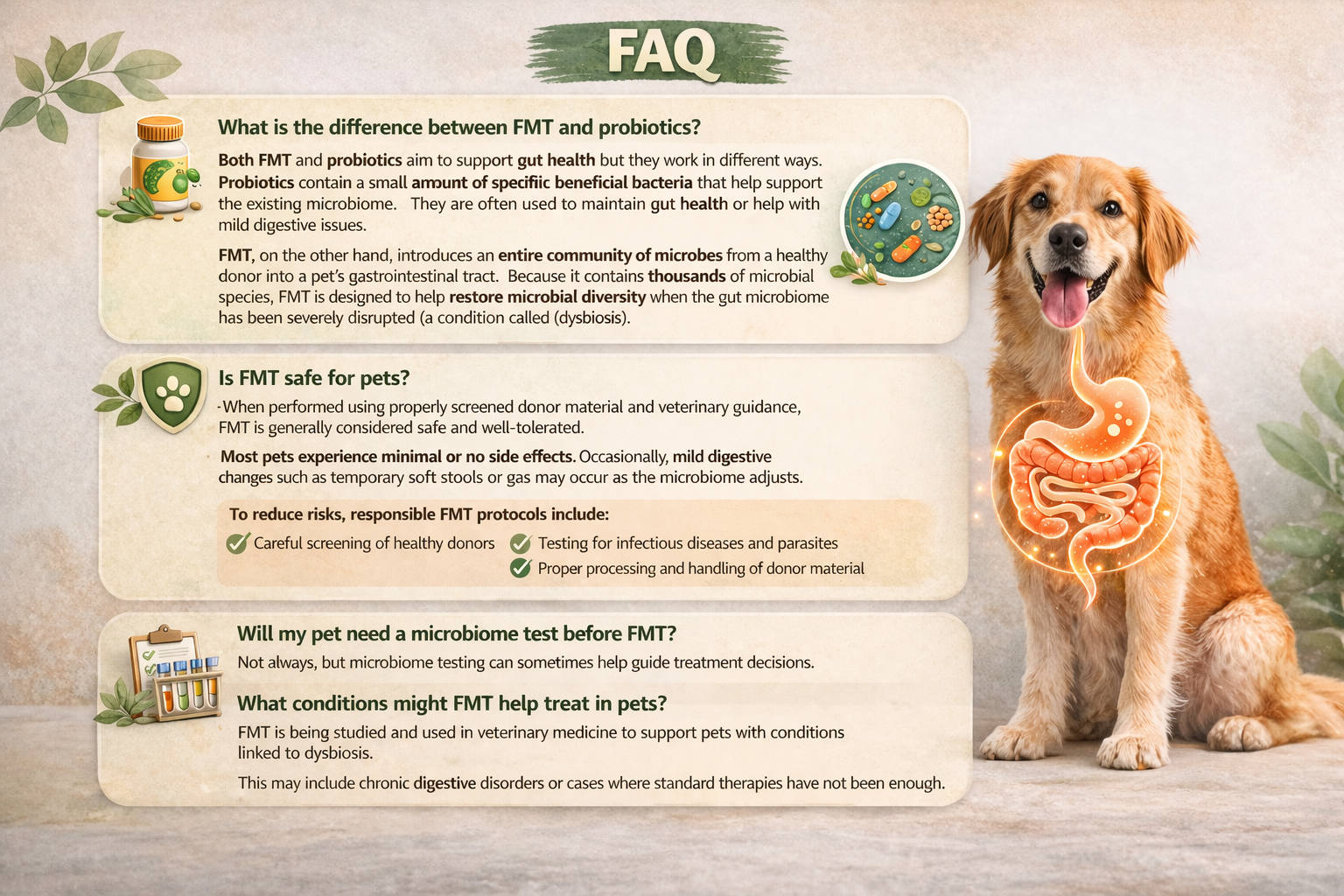
Probiotics introduce beneficial bacteria to help stabilise the microbiome. Common veterinary strains include Lactobacillus, Bifidobacterium and Enterococcus faecium. Another commonly used probiotic yeast is Saccharomyces boulardii. This probiotic yeast has been shown to suppress pathogenic bacteria and improve intestinal barrier function. Unlike bacterial probiotics, S.boulardii is not killed by antibiotics and can be used concurrently.
Synbiotics combine beneficial microbes and fibre. Studies in dogs with chronic inflammatory enteropathy show synbiotics offer more durable support than probiotics alone.
Synbiotics combine beneficial microbes and fibre. Studies in dogs with chronic inflammatory enteropathy show synbiotics offer more durable support than probiotics alone.
5. Supporting gut healing
Chronic digestive disease often involves damage to the intestinal lining, causing a condition known as ‘leaky gut’. Nutrients such as glutamine, zinc, glycine can help repair the gut barrier and restore normal digestion.
Digestive enzymes such as protease, lipase and amylase improve breakdown of nutrients and reduce undigested food reaching the colon. They are especially beneficial in conditions such as maldigestion, pancreatic insufficiency, chronic diarrhoea and food sensitivities.
Other supportive supplements like curcumin, quercetin and omega-3 fatty acids also help reduce inflammation.
Digestive enzymes such as protease, lipase and amylase improve breakdown of nutrients and reduce undigested food reaching the colon. They are especially beneficial in conditions such as maldigestion, pancreatic insufficiency, chronic diarrhoea and food sensitivities.
Other supportive supplements like curcumin, quercetin and omega-3 fatty acids also help reduce inflammation.
6. Resetting the microbiome ecosystem
In more severe cases of dysbiosis, veterinarians may consider faecal microbiota transplantation (FMT). FMT might sound unusual, but it’s rooted in a simple idea: restore balance in the gut by introducing beneficial microbes from a healthy donor into a sick animal’s gut. Unlike standard probiotics that contain only a few strains, FMT delivers a whole community of microbes, helping to replace missing or low quantity bacteria and crowd out harmful ones. FMT involves transferring carefully screened healthy donor microbiota into the recipient’s gastrointestinal tract, and is done via two main ways:
- Oral capsules containing carefully processed, freeze-dried donor microbes
- Rectal enema prepared in the clinic
A healthy gut is the foundation of health. By combining dietary strategies, microbiome support and gut-healing supplements, we can help pets with chronic digestive problems regain a resilient, more balanced gut ecosystem.
Created with